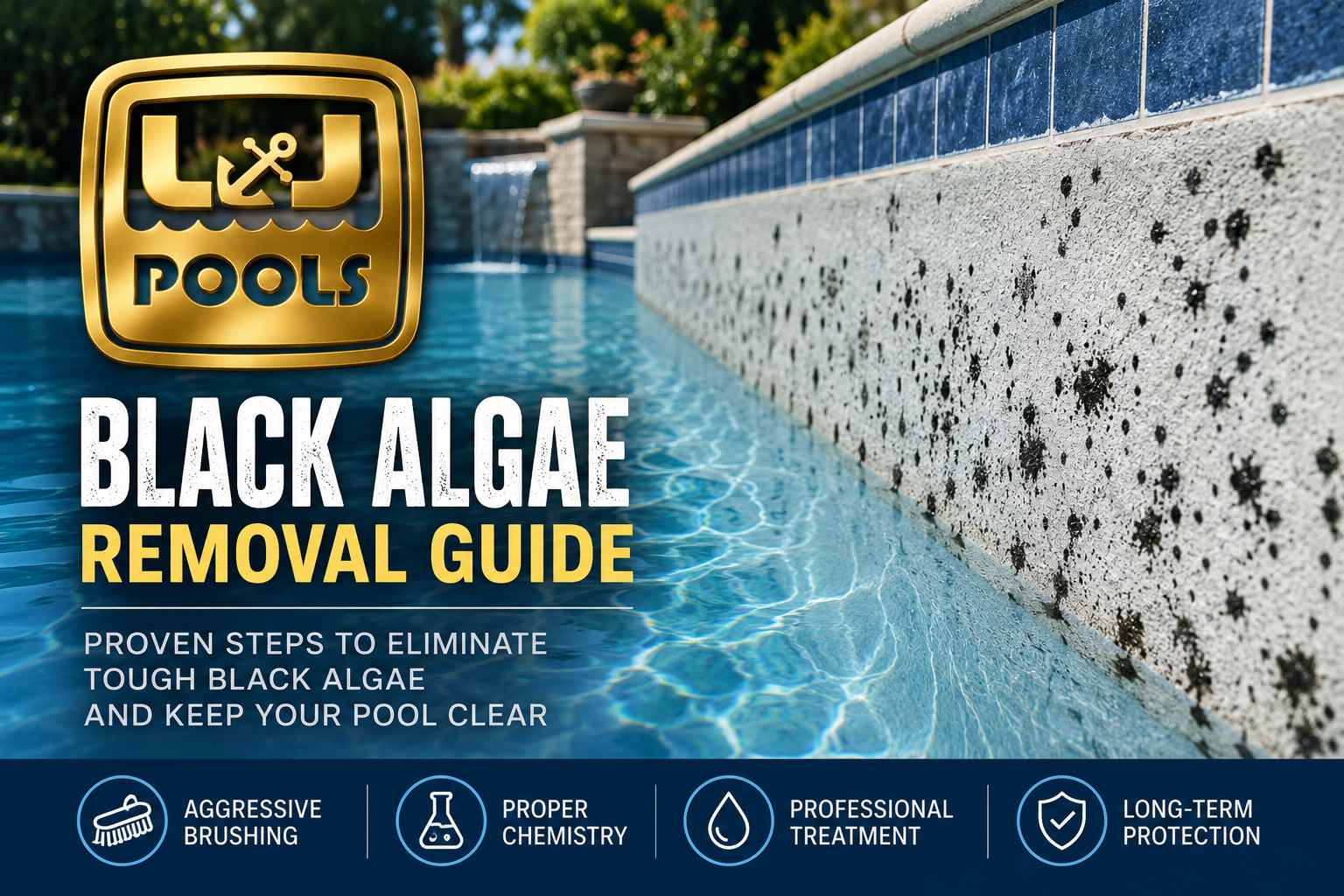
Black Algae Removal Guide
If you’ve noticed dark black or blue-green spots clinging to the walls or floor of your swimming pool that won’t brush away, you’re likely dealing with black algae. Unlike green algae, black algae is one of the most stubborn types of algae found in swimming pools. It develops deep roots that penetrate tiny cracks and pores in pool surfaces, making it difficult to eliminate without the proper treatment.
The good news is that with the right approach and quality pool chemicals, black algae can be removed and prevented from coming back.
What Is Black Algae?
Black algae is actually a type of cyanobacteria that forms hard, dark-colored spots on pool surfaces. It most commonly appears in concrete, gunite, plaster, and pebble-finish pools because these surfaces provide places for the algae to anchor itself.
While it can occasionally appear in vinyl liner pools, it is much less common.
Signs You Have Black Algae
Look for these common symptoms:
- Small black or dark blue spots on pool walls or floor
- Spots that remain after vacuuming
- Slimy or rough texture when touched
- Algae that resists normal brushing
- Spots that quickly return after shocking the pool
If the spots don’t brush away easily, you’re probably dealing with black algae rather than dirt or staining.
Why Does Black Algae Grow?
Black algae typically develops when pool water isn’t consistently sanitized or circulated. Common causes include:
- Low chlorine levels
- Poor water circulation
- Improper water chemistry
- Dirty pool equipment
- Debris left in the pool
- Lack of routine brushing
Even well-maintained pools can occasionally develop black algae, especially during long periods of hot weather.
How to Remove Black Algae
Step 1: Test and Balance the Water
Before treatment, make sure your water chemistry is properly balanced.
Recommended levels:
- pH: 7.2–7.4
- Total Alkalinity: 80–120 ppm
- Calcium Hardness: 200–400 ppm
- Cyanuric Acid: 30–50 ppm (non-salt pools)
Balanced water allows sanitizers to work much more effectively.
Step 2: Brush Aggressively
This is one of the most important steps.
Use a stainless steel brush for plaster or gunite pools (or a nylon brush for vinyl liners) and vigorously scrub every black algae spot. Brushing breaks open the protective layer surrounding the algae so chlorine can penetrate and kill it.
You may need to brush multiple times over several days.
Step 3: Shock the Pool
After brushing, raise the chlorine level with a high-quality pool shock.
Keep your pump running continuously during treatment to circulate the sanitizer throughout the pool.
Step 4: Add a Quality Algaecide
Using a professional-grade algaecide after shocking helps destroy any remaining algae and prevents regrowth.
At L&J Pools, we recommend ProTeam Pool Chemicals for maintaining healthy, crystal-clear water. Their professional water care products can be an excellent addition to your pool maintenance program when used alongside proper sanitization.
Step 5: Clean the Filter
Dead algae can clog your filter quickly.
Depending on your filter type:
- Backwash sand and DE filters
- Clean cartridge filters thoroughly
- Empty skimmer and pump baskets
Continue filtering until the water is completely clear.
Step 6: Repeat if Necessary
Black algae is extremely resilient.
You may need to repeat the brushing and shocking process several times before every colony has been eliminated.
Consistency is the key to success.
Preventing Black Algae
Once you’ve removed black algae, prevention is much easier than treatment.
Here are a few best practices:
- Maintain proper chlorine levels.
- Test your water weekly.
- Brush pool walls regularly.
- Clean your filter on schedule.
- Keep debris out of the pool.
- Run your circulation system long enough each day.
- Have your water professionally tested throughout the swimming season.
Routine maintenance dramatically reduces the chances of black algae returning.
When to Call a Professional
If black algae has spread across large sections of your pool or keeps coming back despite treatment, professional service may be the best option. Severe infestations often require repeated chemical treatments, specialized brushing techniques, and expert water balancing.
At L&J Pools, our experienced service technicians can identify the source of the problem, professionally treat black algae, balance your water chemistry, and recommend the best ProTeam Pool Chemicals to help keep your pool clean and healthy all season long.
Keep Your Pool Crystal Clear
Black algae may be one of the toughest pool problems to tackle, but it isn’t impossible to eliminate. With aggressive brushing, balanced water chemistry, proper sanitization, and regular maintenance, you can restore your pool to a clean, inviting condition.
If you’re struggling with black algae or need professional pool maintenance, L&J Pools is here to help. Whether you need expert water testing, weekly maintenance, equipment service, or professional algae treatment, our team has the experience to keep your pool looking its best all summer long.
Comments are closed