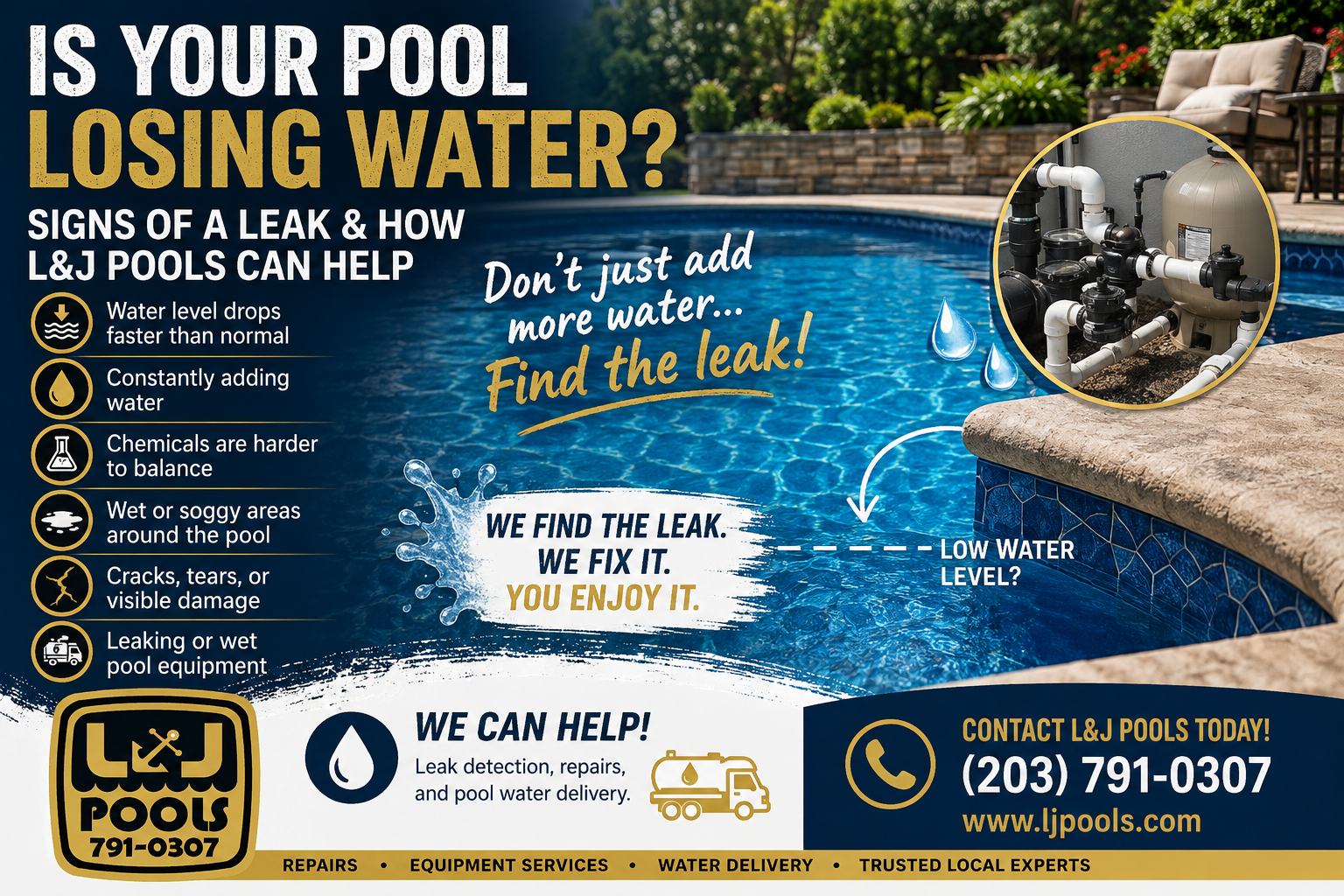
It’s normal for a swimming pool to lose some water from evaporation, splashing, and regular use. But if you’re constantly reaching for the garden hose or noticing the water level dropping faster than usual, there may be a leak somewhere in your pool or equipment.
Pool leaks aren’t just inconvenient. Left untreated, they can waste a significant amount of water, affect your pool’s chemical balance, increase operating costs, and potentially cause damage around the pool.
Here are some of the most common signs that your pool may be losing water—and how L&J Pools can help.
1. Your Pool Water Level Keeps Dropping
One of the most obvious signs of a potential leak is a noticeable drop in the water level.
Some water loss is expected during hot, sunny, or windy weather due to evaporation. However, if you’re adding water much more frequently than usual, especially when the pool isn’t getting heavy use, it’s worth investigating.
A simple way to get a better idea is with a bucket test. Place a bucket of pool water on a pool step and mark the water level inside the bucket and the pool water level outside it. After about 24 hours, compare the two. If the pool loses noticeably more water than the bucket, a leak may be present.
2. You’re Constantly Adding Water
Do you feel like you’re always topping off your pool?
Having to add water occasionally is normal, but frequent refilling can indicate a problem. Even a relatively small leak can add up to a substantial amount of lost water over time.
Ignoring the problem and continually adding more water may temporarily maintain the pool level, but it doesn’t address the cause of the water loss.
3. Your Pool Chemicals Are Harder to Balance
A leaking pool doesn’t only lose water—it loses treated water.
As pool water escapes and fresh water is added, chlorine, salt, stabilizer, and other chemicals become diluted. You may notice that maintaining proper water chemistry suddenly requires more chemicals than it normally does.
If your pool chemistry has become unusually difficult to maintain at the same time that you’re experiencing water loss, a leak could be contributing to the problem.
4. There Are Wet or Soggy Areas Around the Pool
Pay attention to the ground surrounding your pool and equipment.
Unexplained wet spots, soggy grass, soft soil, or areas that remain damp even during dry weather can sometimes indicate an underground plumbing leak or another source of escaping pool water.
Water can travel underground before becoming visible, so the location of the wet area isn’t always the exact location of the leak.
5. You Notice Cracks, Tears, or Damage
Depending on the type of pool you have, visible damage may provide clues.
For vinyl liner pools, look for tears, punctures, separations, or damage around fittings, steps, lights, and other penetrations.
For gunite or concrete pools, cracks or damaged areas should be inspected to determine whether they may be contributing to water loss.
6. The Water Level Stops Dropping at a Certain Point
This can be an especially useful clue.
If your pool loses water but consistently stops dropping at approximately the same level, the leak may be located near that elevation.
For example, if the water stops dropping around the skimmer, return fitting, light, or another pool component, that area may deserve closer inspection.
Important: Avoid intentionally allowing the pool to drain excessively just to locate a leak. Low water levels can create additional problems depending on the type of pool and equipment.
7. Your Pool Equipment Area Is Leaking
Not every pool leak is located inside the pool itself.
Check around your:
- Pool pump
- Filter
- Heater
- Valves
- Plumbing connections
- Unions and fittings
- Equipment pad
Drips, puddles, spraying water, or persistent moisture around the equipment can indicate a plumbing or equipment-related leak.
Some leaks are easy to spot, while others may only occur when the circulation system is operating.
Why You Shouldn’t Ignore Pool Water Loss
A pool that is losing water can become more expensive to maintain the longer the problem continues.
Excessive water loss can lead to:
- Higher water usage
- Increased chemical consumption
- Difficulty maintaining proper water chemistry
- Potential damage around the pool
- Problems with pool equipment if the water level becomes too low
- Possible damage to surrounding soil, decking, or structures
Finding and repairing the problem early can help prevent a relatively small issue from becoming a much larger repair.
How L&J Pools Can Help
If you suspect your pool is losing water, L&J Pools can help determine the source of the problem and recommend the appropriate repair.
Our team can inspect your pool and pool equipment for potential sources of water loss, including plumbing, fittings, equipment, vinyl liners, and other areas of the pool system.
Once the problem is identified, we can discuss the repair options needed to get your pool back to normal.
And after the leak is repaired, L&J Pools also offers pool water delivery services, making it easy to get your pool water level back where it belongs without spending hours filling it with a garden hose.
Losing Water? Don’t Keep Refilling It—Find Out Why.
If your pool seems to be losing more water than it should, don’t wait for the problem to get worse.
Contact L&J Pools today to schedule service.
📞 Call L&J Pools at (203) 791-0307
🌐 Visit www.ljpools.com
From finding the source of water loss to completing the necessary repairs and delivering pool water afterward, L&J Pools can help get your pool back up and running so you can get back to enjoying it.
Comments are closed