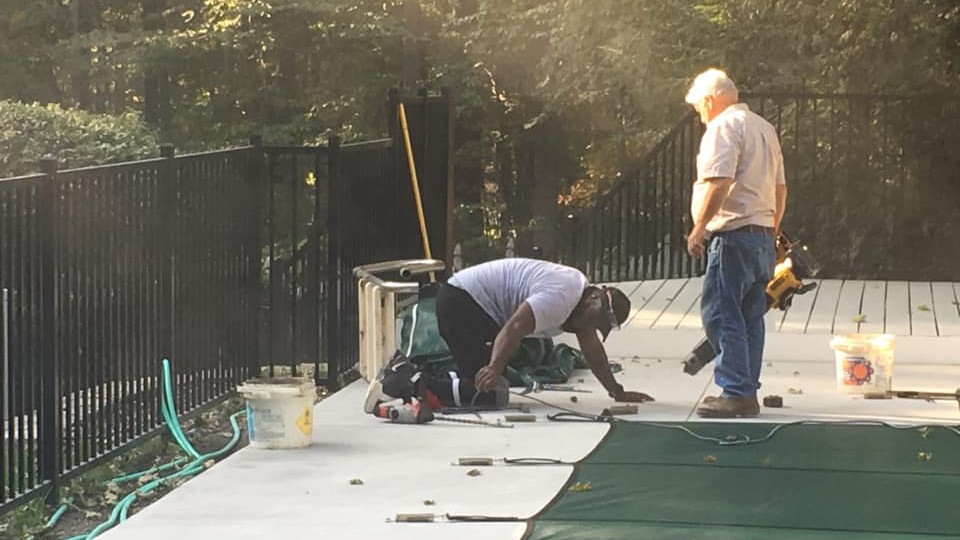
The arrival of spring brings back many of our favorite things, including a reemergence of plants and animals, increased day-light hours, and warmer temperatures. For pool owners, warm weather means it is time to start thinking about opening your pool! However, just because the sun is shining does not mean the pool is quite ready for swimmers. With just a small amount of work, however, you can be on your way to a clean, safe, healthy, and swim-ready pool.
Don’t want to worry about the hassle of opening your own pool? We’ve got you covered! Fill out the form below for a free quote on opening your pool this season!
Drain And Clean Your Pool Cover

Whether you have a winter cover or a solid safety cover, you will need to remove the excess water from the top prior to taking it off. If there is a substantial amount of water, you may want to use a cover pump to help you with the process. Afterward, sweep or use a blower to remove all leaves and other debris from the cover because if you don’t, whatever is sitting on the cover will wind up in your pool!
Remove Your Pool Cover
When removing the pool cover, you may need help if you have a large pool or are working with a safety cover. If a little debris ends up in the pool, it’ll be OK since you will be vacuuming and then shocking the pool before you start swimming.
Clean And Store Your Pool Cover
After you remove the cover, lay it out, brush off any remaining dirt, spray it down, and then let it dry. When the cover is completely dry, sprinkle both sides with talcum powder or alkalinity plus to prevent mold and mildew from growing. Lastly, fold the cover loosely and store it in a cool, dry place.
Raise Your Water Level Back To Normal

First, you should try using a garden hose to fill your pool back to its normal water level. This is typically at about the middle of the skimmer opening or halfway up the tile. If your water levels have fallen well below this and you have a well, we highly advise ordering a water delivery, that way your summer doesn’t kick off with a dried up well! You can order a water delivery by filling out the Water Delivery Request Form on our website.
Reconnect the Pool Equipment
If you prepared your pool for freezing temperatures, you will need to reconnect your pool equipment. This includes your filter, pump, heater, and anything else you may have had connected to your filtration system. For above ground pools, you will need to reconnect the flexible plumbing lines to the pool equipment and skimmer.
Remove The Winterizing Plugs from Your Skimmer and Return Lines

REMEMBER: Don’t forget to remove any winterizing plugs you used in your skimmer and return lines. Make sure to wait until after the antifreeze has drained before removing the plugs. Remember to reinstall the regular drain plugs in your pumps, filter, heater, and any other equipment. Now you can reconnect any return valve fittings that you removed last winter.
Turn The System Back On
Turn your pool equipment back on. This includes priming the pump and turning on the circulation and filtration system. If you have an air relief valve on your filter, make sure to open it to bleed the air from the system. Once water spurts out, close the air relief valve. Check the equipment for leaks or unusual noises.
Test The Pool Chemistry

Once the circulation system has been running for a few hours, test your pool water for pH, Total Alkalinity (TA), and Chlorine levels with a test kit or test strips. Ideal levels should be:
- pH: 7.4 to 7.6
- Total Alkalinity: 80 to 120 ppm
- Free Available Chlorine: 2.0 to 4.0 ppm
- Calcium Hardness: 200-400 ppm
Balance The Water Starting With The Total Alkalinity
Balancing your water properly is a necessity for safe and healthy swimming. You can control the pH and chlorine levels in your water by first adjusting the Total Alkalinity.
If TA is too high, you can use dry acid to lower the levels to the ideal range. To lower the TA by 10 ppm, add 1.5 pounds of dry acid for every 10,000 gallons of water.
If TA is too low, add alkalinity up to increase it. Adding 1.5 pounds of alkalinity up will increase the TA of 10,000 gallons of water by 10 ppm. Wait at least 4 hours after adding alkalinity up before retesting the water.
Adjust The PH Balance

Once the TA is within its proper range of 80-120 ppm, adjust the pH balance. When TA is back to an ideal range, test the pH. The acceptable range is 7.2-7.8, and the ideal range is 7.4-7.6.
If the pH level is above 7.8, add small doses (2 cups at a time) of dry acid. Wait 2 hours with the circulation system running and retest before adding more acid. Always follow the label directions.
If the pH level is below 7.4, add 6 ounces of soda ash, which should increase the pH level of 10,000 gallons of water by about 0.2 ppm. Wait 4 hours with the system running and retest the water before adding more soda ash. If the pH is below 7.0, follow the label directions for the amount needed or to go your local Leslie’s store for additional testing.
Adjust The Calcium Hardness
Your pool’s Calcium Hardness (CH) level should always be above 150 ppm. If the CH is too low, bring it up by adding hardness plus. Using 1.25 pounds will increase the CH of 10,000 gallons of water by 10 ppm. The target is 200-400 ppm.
Brush And Vacuum The Pool

After your pool chemistry is adjusted, thoroughly brush and vacuum your pool to remove any remaining dirt and debris, giving special attention to areas near pool steps, ladders, lights, or other crevices.
Run The Filtration System Over Night
Your pool’s filtration system will remove the rest of the suspended dirt and debris left over after brushing and vacuuming your pool.
Shock The Pool

Shocking the pool will eliminate any remaining germs and contaminants in your water. Shock the pool following the label instructions using any chlorine shock. If you are in need of chlorine shock, give us a call or stop by our showroom! Always read the instructions to determine how much of the product to add to your pool. If you have an automatic pool cleaner, you can reinstall the cleaner 24 hours after shocking the pool.
Have questions, or need help? Contact Us Here or call our office at (203) 791-0307
If you are a new pool owner or would just rather someone open your pool for you, submit a Pool Opening Request Form here! Our technicians come prepared with everything and everything you may need when opening your pool!
Comments are closed