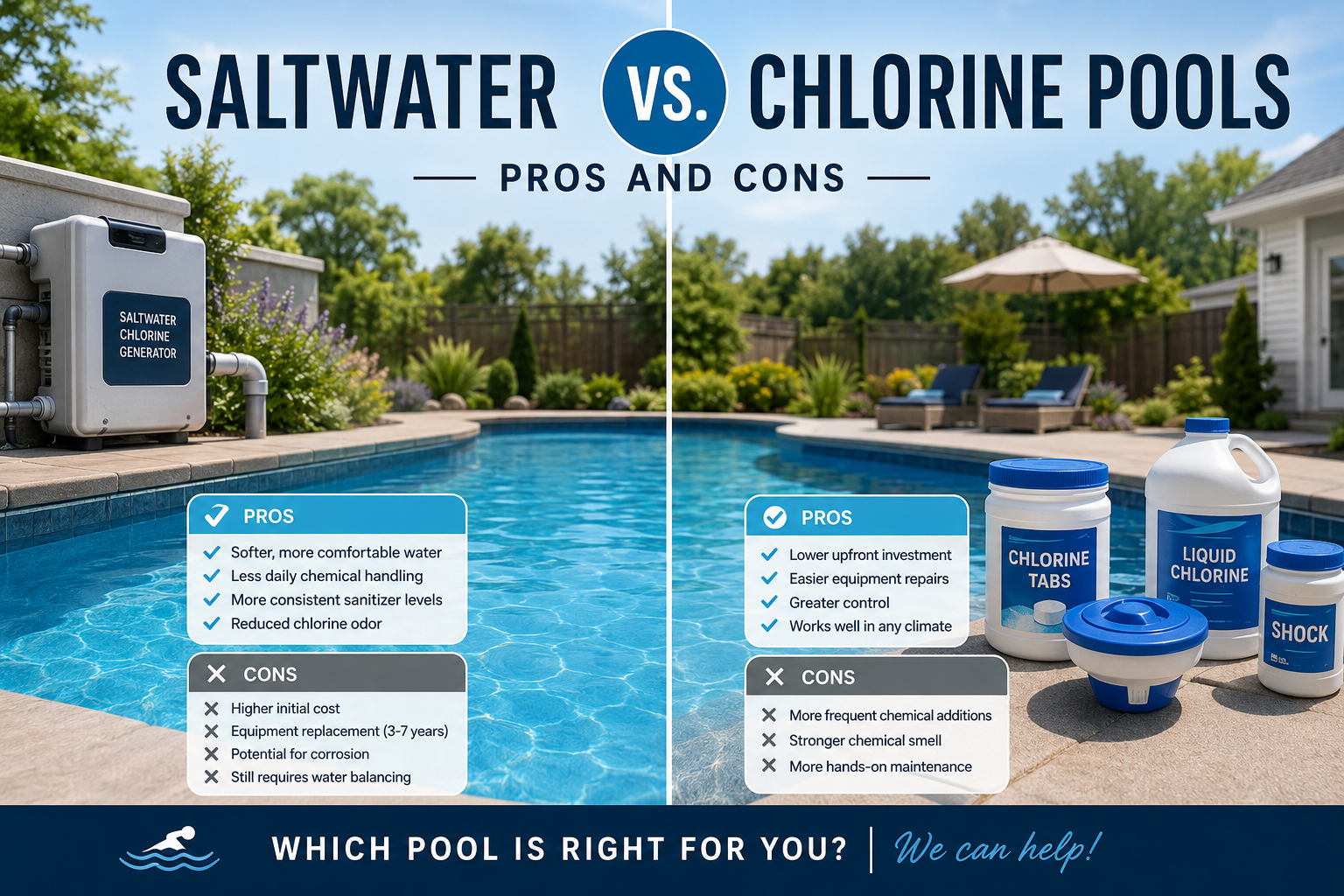
Saltwater vs. Chlorine Pools: Pros and Cons
If you’re planning to install a new swimming pool, one of the biggest decisions you’ll make is choosing between a traditional chlorine pool and a saltwater pool. Both systems use chlorine to keep your water clean and safe, but they generate and maintain that chlorine in different ways.
At L&J Pools, homeowners often ask us which option is better. The truth is that there isn’t a one-size-fits-all answer—it depends on your budget, maintenance preferences, and how you plan to use your pool.
Let’s take a closer look at the advantages and disadvantages of each.
What Is a Saltwater Pool?
Despite the name, a saltwater pool isn’t like swimming in the ocean. It contains a much lower concentration of salt—typically around one-tenth the salinity of seawater.
Instead of adding chlorine manually, a salt chlorine generator converts dissolved salt into chlorine through a process called electrolysis. This creates a steady supply of sanitizer that continuously disinfects your pool.
What Is a Traditional Chlorine Pool?
A chlorine pool relies on manually adding chlorine in the form of tablets, liquid chlorine, or granular shock treatments. Regular testing and chemical adjustments are needed to maintain proper sanitizer levels.
This is the most common type of residential swimming pool and has been the industry standard for decades.
Saltwater Pool Pros
Softer, More Comfortable Water
Many swimmers notice that saltwater feels softer on the skin and is less irritating to the eyes. It also tends to leave hair feeling less dry after swimming.
Less Daily Chemical Handling
Since the chlorine generator produces sanitizer automatically, you’ll spend less time adding chlorine manually.
More Consistent Sanitizer Levels
The generator provides a steady chlorine output, helping avoid the highs and lows that can occur with manually treated pools.
Reduced Chlorine Odor
Properly balanced saltwater pools generally produce less of the strong chlorine smell many people associate with public pools.
Saltwater Pool Cons
Higher Initial Cost
Saltwater systems require a salt chlorine generator, which increases the upfront installation cost compared to a traditional chlorine pool.
Equipment Replacement
The salt cell inside the generator typically lasts 3–7 years, depending on usage and maintenance, and will eventually need replacement.
Potential for Corrosion
Salt can accelerate corrosion on certain metals and natural stone if the pool isn’t designed or maintained properly. Using compatible materials and maintaining proper water chemistry helps minimize this risk.
Still Requires Water Balancing
A common misconception is that saltwater pools are maintenance-free. While chlorine production is automated, you’ll still need to regularly monitor pH, alkalinity, calcium hardness, stabilizer, and other water chemistry.
Traditional Chlorine Pool Pros
Lower Upfront Investment
Traditional chlorine systems are generally less expensive to install because they don’t require a salt generator.
Easier Equipment Repairs
Most pool professionals are familiar with chlorine systems, and replacement parts are widely available.
Greater Control
Some pool owners prefer manually adjusting chlorine levels, especially during periods of heavy swimming or after storms.
Works Well in Any Climate
Traditional chlorine systems perform consistently regardless of water temperature.
Traditional Chlorine Pool Cons
More Frequent Chemical Additions
You’ll need to regularly add chlorine and shock treatments to maintain safe sanitizer levels.
Stronger Chemical Smell
Improperly balanced pools can develop stronger chlorine odors and may cause eye or skin irritation.
More Hands-On Maintenance
Testing and adjusting chlorine levels generally requires more frequent attention than a saltwater system.
Which Pool Is Easier to Maintain?
Many homeowners assume saltwater pools require almost no maintenance. While they often reduce the amount of manual chlorine additions, they still require:
- Regular water testing
- pH adjustments
- Cleaning the salt cell
- Monitoring salt levels
- Routine equipment inspections
Both pool types benefit from professional maintenance to keep the water balanced and equipment operating efficiently.
Which Option Saves Money?
A traditional chlorine pool usually costs less to install.
A saltwater pool often costs more upfront but may reduce ongoing chlorine purchases over time. However, you’ll eventually need to replace the salt cell, so long-term costs can be similar depending on usage and maintenance.
Which Is Right for You?
A saltwater pool may be the best choice if you:
- Prefer softer-feeling water
- Want more automated chlorine production
- Don’t mind a higher upfront investment
- Want fewer manual chlorine additions
A traditional chlorine pool may be ideal if you:
- Want the lowest initial installation cost
- Prefer simpler equipment
- Don’t mind routine chemical maintenance
- Want straightforward repairs and replacements
Let L&J Pools Help You Choose
Whether you’re building a brand-new backyard oasis or upgrading your existing pool, our team can help you determine which sanitation system best fits your lifestyle and budget.
We’ll explain the pros and cons of each option, answer your questions, and make sure your pool is built for years of safe, enjoyable swimming.
Ready to start your dream pool project? Contact L&J Pools today to discuss your options and let our experienced team help you create the perfect backyard retreat.
Comments are closed